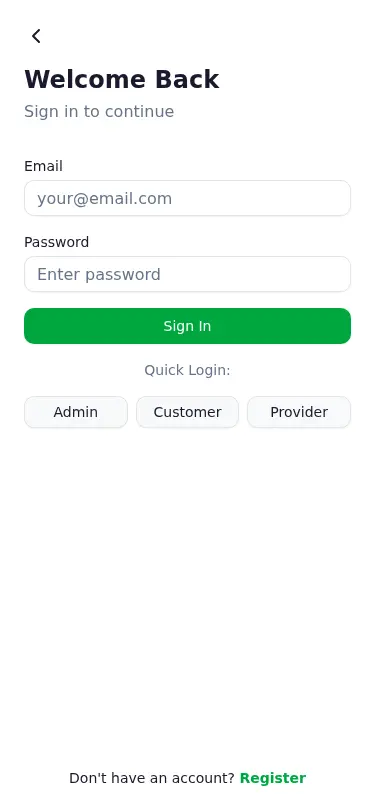
HarKaam — Progressive Web App Case Study
Overview
HarKaam is a full-featured Progressive Web App (PWA) for home services marketplace, built mobile-first to work as a native-like app on Android devices. It connects homeowners with verified local service providers across 10 categories including plumbing, electrical work, painting, AC repair, cleaning, and more. The app supports three user roles — Customer, Provider, and Admin — each with dedicated dashboards, real-time booking lifecycle tracking, in-app chat, payment processing with commission model, star ratings & reviews, and provider verification system. Built with Next.js 16, TypeScript, Prisma ORM, SQLite, and shadcn/ui.
See more of my featured projects or learn about my development services.
The Problem
In Karachi and other Pakistani cities, homeowners struggle to find verified local service providers for plumbing, electrical work, AC repair, painting, and cleaning. Existing classifieds sites list providers with no verification, no real-time availability, no in-app payments, and no protection if the job goes wrong. Service providers on the other side depend entirely on word-of-mouth referrals, have no scheduling tool, and lose track of bookings. The challenge was to build a single PWA that solves both sides of the marketplace while working as a native-like installable app on Android and iOS.
The Solution
HarKaam is a Progressive Web App built mobile-first with Next.js 16 and Prisma ORM. The app supports three user roles — Customer, Provider, and Admin — each with dedicated dashboards. Customers browse 50+ services across 10 categories, view verified provider profiles, and book appointments through a real-time lifecycle (Pending → Accepted → On The Way → Working → Completed). Providers receive bookings, manage availability, and chat with customers in-app. Admins verify provider documents, manage commission rates, and monitor the entire marketplace. JWT authentication with bcryptjs password hashing protects every role-based route.
Tech Stack
Next.js 16 App Router with TypeScript powers the entire application. Prisma ORM abstracts the SQLite database with 18 models (Users, Bookings, Payments, Reviews, Messages, etc.). The PWA is configured with standalone mode, portrait lock, and installable on Android/iOS via manifest.webmanifest. shadcn/ui delivers consistent accessible UI components. JWT + bcryptjs handle authentication and role-based access control. The commission-based revenue model (10% configurable) makes the platform monetizable from day one. Bilingual Urdu + English support targets the local Pakistani market.
Results & Outcomes
Key Metrics
25+
Screens
18
DB Models
50+
Services
10
Categories
Key Features
Related Projects
View All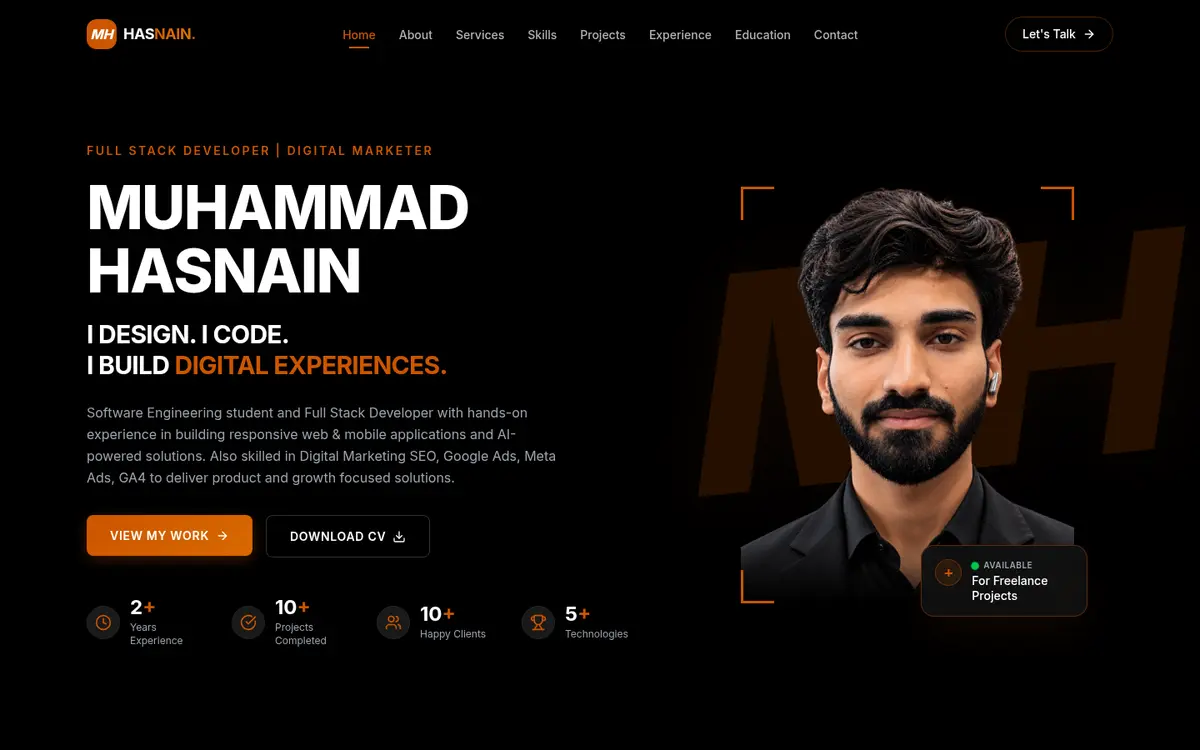
Web Application
Portfolio Website
Personal portfolio with dark theme, smooth animations, and SEO optimization.
AI-Powered SaaS
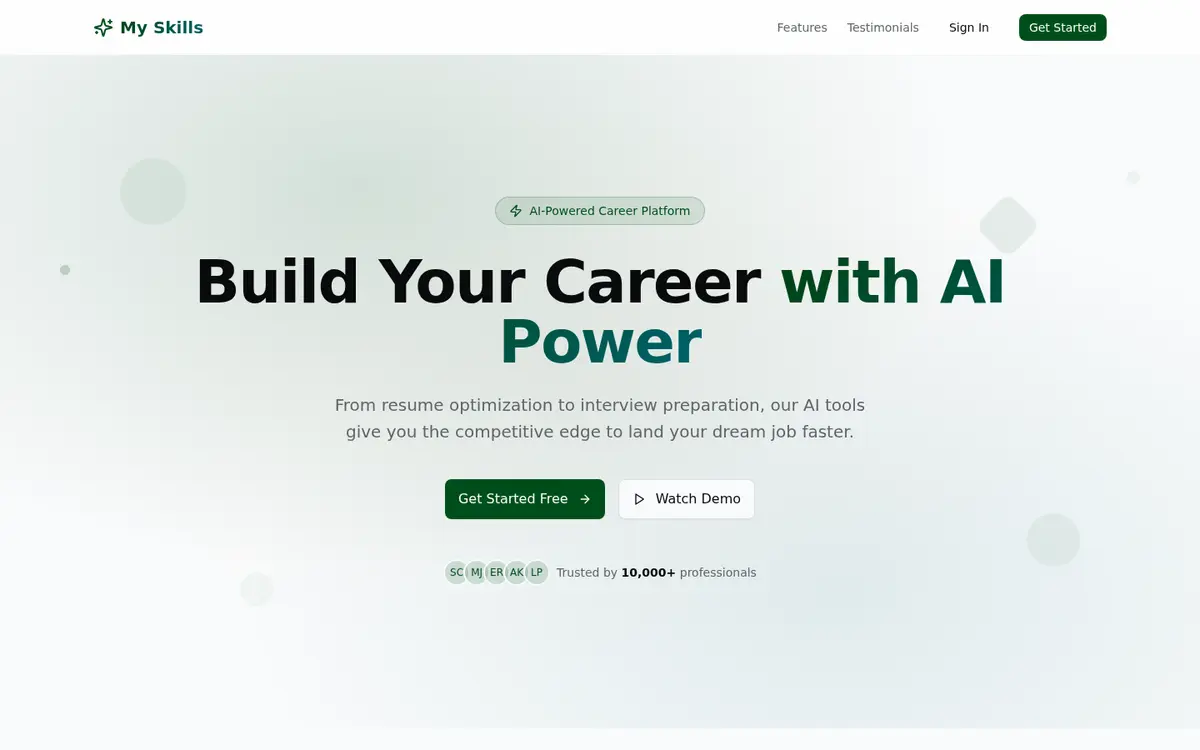
My Skills — AI Career Platform
AI-powered career platform with resume builder, interview prep, skill analysis & job board.
AI-Powered CRM
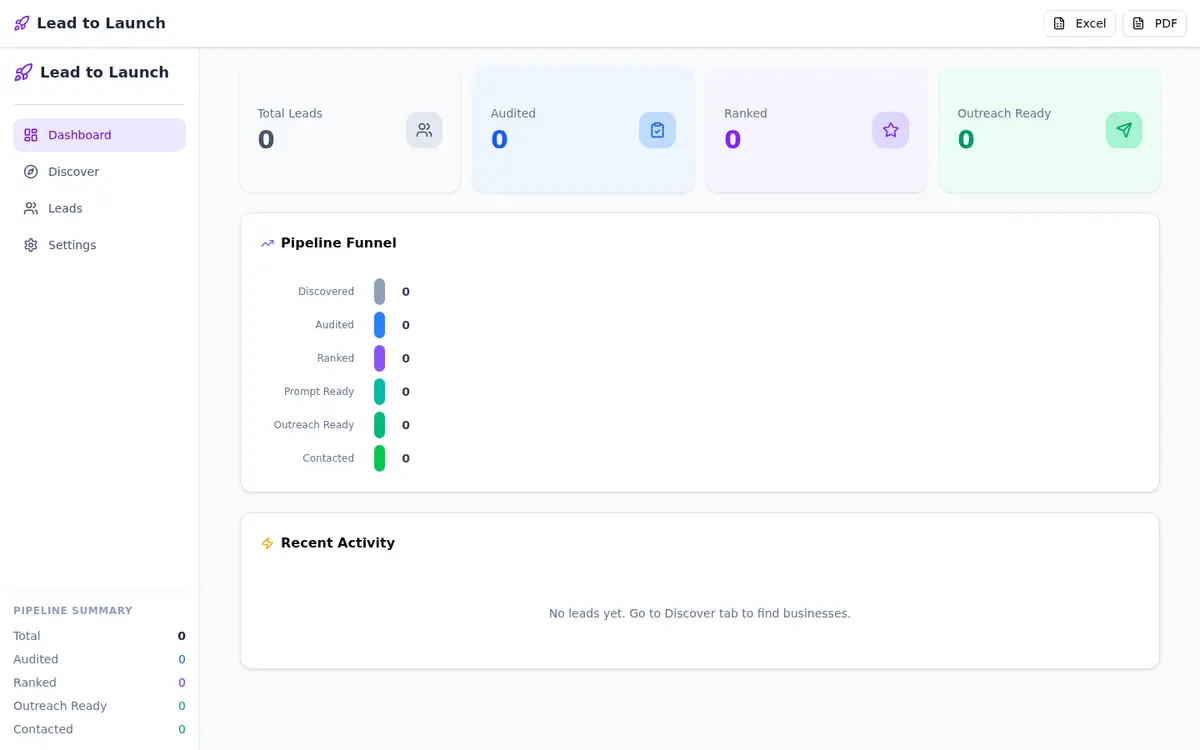
Lead to Launch
AI-powered freelance lead pipeline — discover, audit, rank, and outreach businesses automatically.
Related Articles
View AllAug 2026•6 min read
How I Built an SEO-Optimized Portfolio with Next.js 16
A practical walkthrough of how I built this very portfolio — covering Static Site Generation, JSON-LD structured data, Open Graph images, and a 68-keyword SEO strategy that ranks for "Full Stack Developer Pakistan".
Aug 2026•7 min read
Building PWAs with Next.js 16: A Practical Guide
How I turned a Next.js 16 app into an installable Progressive Web App — covering manifest.webmanifest, standalone mode, service workers, portrait lock, and offline-first UX patterns I used in HarKaam.
Share this case study
Found this useful? Share it with your network.